Balcony Solar: What the UK Can Learn From Germany
Germany has 1.3 million+ balcony solar systems. Here is what drove the boom, and what the UK can learn before plug-in solar goes legal on 27 August 2026.
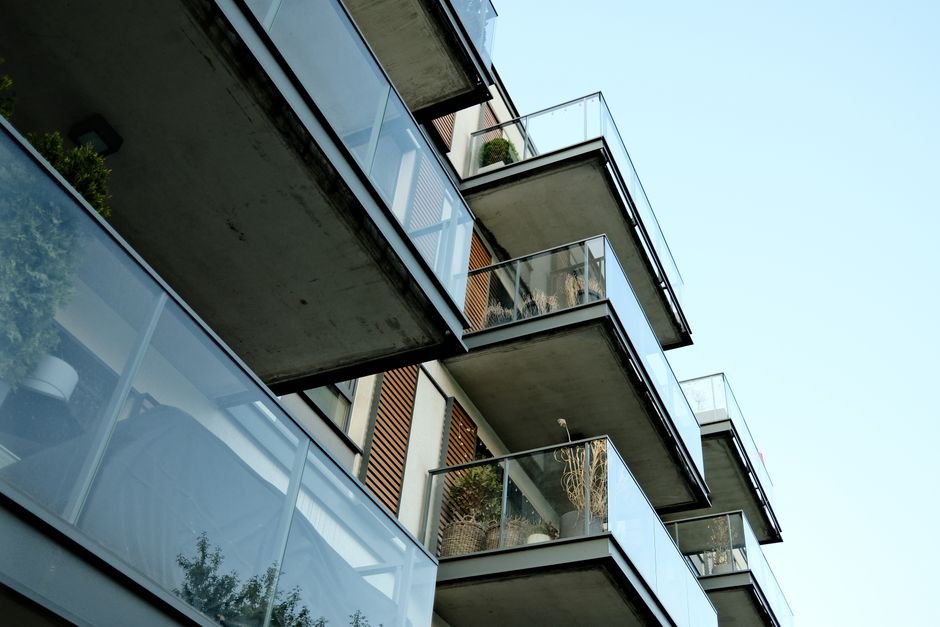
Balcony solar is about to become legal in the UK, and Germany has already run the experiment at scale. More than a decade before Britain's rule change, German households began clipping small solar panels to balcony railings and plugging them straight into a wall socket. The result is one of Europe's quiet energy success stories, and it holds practical lessons for UK buyers ahead of the 27 August 2026 change.
What is a Balkonkraftwerk?
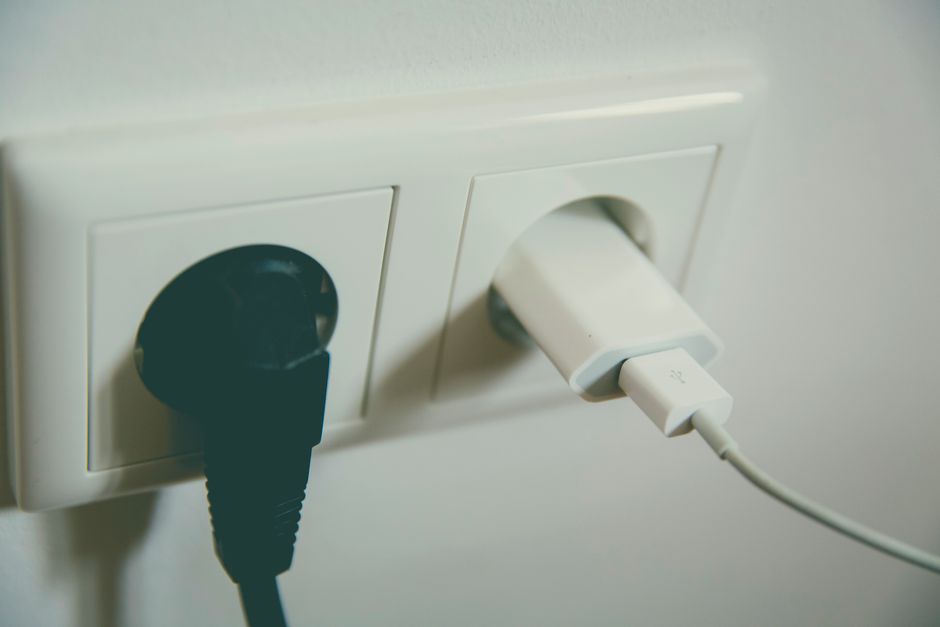
A Balkonkraftwerk (German for balcony power plant) is a small plug-in solar system: usually one or two panels and a compact microinverter that converts their output to mains electricity. Instead of being wired into the fuse board by an electrician, it plugs into an ordinary household socket and feeds power directly into the flat's circuits. Any appliance running at the time, from a fridge to a router to a standby TV, uses that free electricity first, so the meter draws less from the grid.
The idea is deliberately modest. A balcony system will not run a heat pump or fill a home battery on its own. It trims the constant background load that every home carries, and it does so without scaffolding, roof access or a large upfront bill. That simplicity is exactly why it took off in Germany, and why the UK has now written it into law. If you want the mechanics, our guide to how plug-in solar works walks through the microinverter and socket setup.
How big is Germany's balcony solar market?
Germany's Marktstammdatenregister (the national register of energy systems, known as MaStR) had logged more than 1.3 million balcony solar systems by 2026. Roughly 430,000 of those were added during 2025 alone, which works out at about one new system connected every 73 seconds. The true figure is higher still: researchers at HTW Berlin have long noted a large unregistered "dark figure", and some estimates put the installed base near four million households.
Whichever number you take, the direction is unmistakable. A niche hobbyist product in 2018 became a mainstream purchase in supermarkets and DIY chains within six years. For a piece of hardware that generates only a few hundred watts, that is remarkable market penetration, and it did not happen by accident.
What did Germany change to drive adoption?
The turning point was Solarpaket I (the Solar Package I reform law), which took effect in 2024. It made three practical changes that removed most of the friction from owning a balcony system.
First, it raised the inverter feed-in limit from 600W to 800W AC, bringing Germany in line with a common European figure and letting a single kit cover more of a home's base load. Second, it slashed registration: the federal network agency cut the MaStR sign-up form from around 20 fields to just five, and scrapped the separate notification owners previously had to send their local grid operator. Registering a system went from a bureaucratic afternoon to a five-minute task. Third, it relaxed the metering rules, letting households keep an older meter temporarily rather than waiting for the utility to fit a new bidirectional one before switching on.
None of these were subsidies. They were rule changes that made a legal, safe product easier to buy and use, and adoption climbed steeply in the months that followed.
Why did protecting renters matter?
Balcony solar is, by definition, a technology for people without their own roof. Its natural home is the flat, the terraced rental and the leasehold apartment. So the single most important thing Germany did was give those residents a legal right to install it.
In October 2024, Germany amended its tenancy law (BGB section 554) and its condominium law (WEG section 20) to make balcony solar a "privileged measure". In plain terms, a landlord or a residents' association can now only refuse an installation in narrow, well-justified cases, such as genuine structural risk or a serious impact on a listed facade. They cannot demand a full electrical inspection of the whole building at the tenant's expense, or insist that a professional installs a kit designed for self-installation.
This is the lesson UK renters should watch most closely. Legalising the hardware is one thing; guaranteeing that the millions of people in flats can actually put it up is another. Our guide to plug-in solar for renters and flats covers where UK tenants stand today.
How does Germany keep balcony solar safe?
Critics warned for years that letting people plug generators into sockets would be dangerous. Germany's experience, across well over a million systems, has not borne that fear out, and the reason is a clear set of safety standards rather than a ban.
Grid connection follows VDE (Germany's electrotechnical standards body) rule VDE-AR-N 4105, which governs how small generators sit alongside the mains. In December 2025 the country went further and published DIN VDE V 0126-95, described as the world's first dedicated product standard for plug-in solar devices. It permits connection through an ordinary Schuko plug by a layperson for systems up to 960W of panels and 800W of feed-in, and it requires the inverter to include anti-islanding protection: the feature that shuts the unit down within a fraction of a second if the grid fails or the plug is pulled, so it can never push live power into a dead circuit. Residual-current monitoring and over-temperature protection are also mandatory.
The principle worth borrowing is that a strong, published standard does more for safety than prohibition. It gives manufacturers a target, retailers the confidence to stock, and insurers something concrete to point to. For the UK picture, see our guide to plug-in solar safety.
What is the UK changing on 27 August 2026?
The UK's rule change arrives through SI 2026/848, formally the Plugs and Sockets etc. (Safety) Regulations 1994 and Electricity Safety, Quality and Continuity Regulations 2002 (Amendment) Regulations 2026. It was made on 16 July 2026, laid before Parliament the next day, and comes into force on 27 August 2026. You can read the instrument in full on legislation.gov.uk, and the policy background in the government's plug-in solar consultation.
The regulations create a new legal category, the "plug-in microgenerator": a device that makes electricity from sunlight, has a maximum AC output of 800W, connects through a standard plug, runs in parallel with the mains, and is not designed to import and store power. Compliant kits must meet an interim product specification and use an approved plug, rather than simply relying on the general BS 7671 wiring rules. Our explainers on whether plug-in solar is legal in the UK and exactly what changes on 27 August go through the detail.
What is the UK borrowing from Germany, and what is different?
The UK has clearly studied the German model. The headline 800W AC ceiling is identical, the plug-into-a-socket premise is the same, and both countries treat the output as self-consumption that offsets what you would otherwise buy from the grid. Where they part company is in how tightly the product and the rollout are controlled.
Certification first. The UK requires kits to meet an interim product specification and use an approved plug before sale. Germany allowed a more open, self-registered rollout and settled the product standard later.
No batteries at first. The UK definition deliberately excludes devices that import and store power, so battery-coupled kits fall outside the first wave. Germany permits balcony storage.
No export payment. UK plug-in systems will not qualify for the Smart Export Guarantee, which needs MCS certification, so there is no payment for surplus you send back. The value is purely in self-consumption.
Ring-main wiring. UK homes typically use ring final circuits, unlike Germany's radial circuits, which is one reason regulators took a more cautious, product-approval route.
No renter right yet. Germany gave tenants a legal right to install; the UK change legalises the hardware but does not compel landlords to allow it.
What can the UK still learn from Germany?
Make registration and connection effortless. Germany's uptake curve bent upward when the paperwork shrank to a five-minute online form. A single, simple UK notification process would do the same.
Protect the people who need it most. Balcony solar lives on rented balconies. Clear rights for tenants and leaseholders would turn a legal product into an accessible one.
Publish a firm product standard quickly. An interim specification is a start, but a settled standard like Germany's DIN VDE V 0126-95 gives buyers, retailers and insurers lasting confidence.
Keep the grid rules pragmatic. Germany avoided blocking installs on slow meter swaps. Sensible, low-friction connection rules keep momentum going.
Trust standards over prohibition. More than a million German systems show that mass self-install can be safe when the safety engineering is built into the product.
Plug-in Solar in the UK: The Complete 2026 Guide
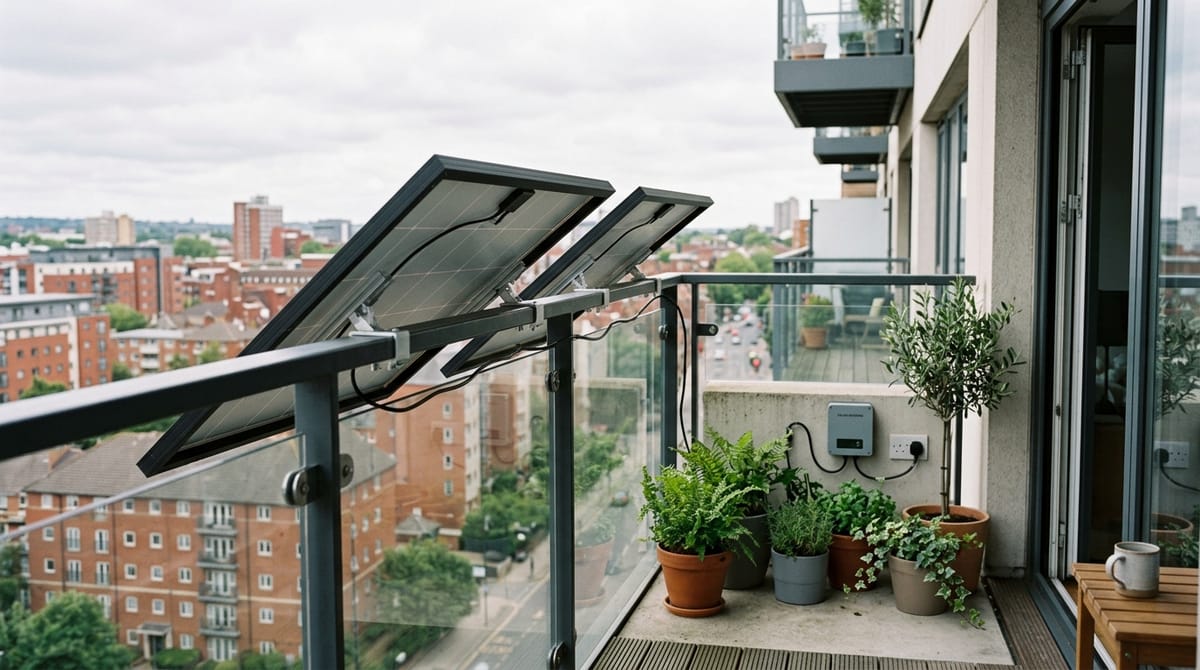
UK Plug-in Solar 2026: What Changes on 27 August?
Plug-in Solar for Renters and Flats
Plug-in Solar Safety: RCDs, Sockets and UK Wiring
Frequently asked questions
How many balcony solar systems does Germany have?
Is UK balcony solar the same 800W as Germany?
Can I add a battery to a UK plug-in solar kit?
Will I get paid for electricity I export in the UK?
Can renters install balcony solar in the UK?
New to plug-in solar?
Start with our complete UK guide to how balcony and plug-in solar works, what it costs, and whether it is right for your home.