Plug-in Solar Savings: How Much Can You Save in the UK?
How much can plug-in solar save on UK energy bills? Work out generation, self-consumption and your unit rate - and why payback is still unknown.
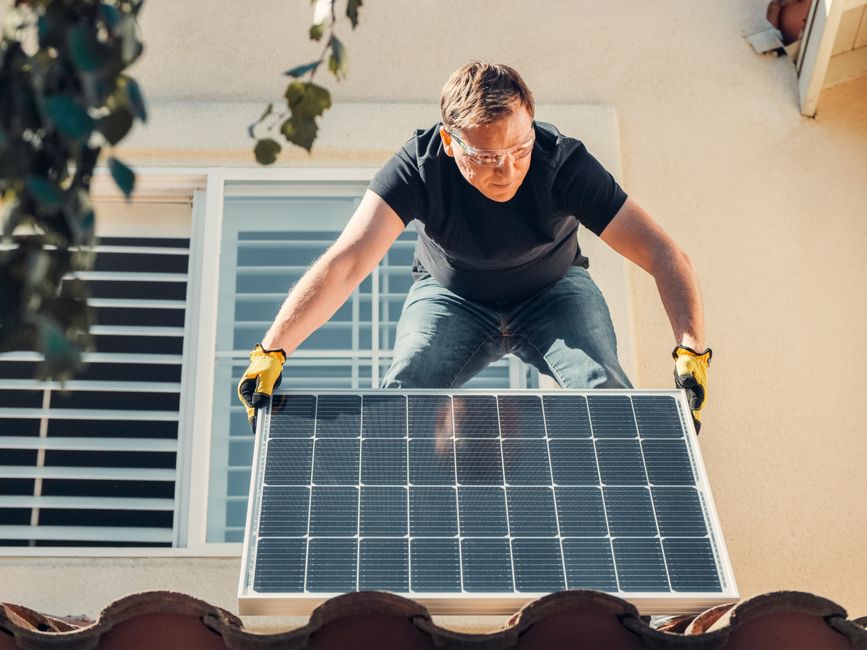
Plug-in solar savings come down to a simple chain: how much electricity your panels generate, how much of it you actually use rather than waste, and what you pay per unit. Get all three right and an 800W system pays for itself; get self-consumption wrong and most of the benefit leaks away.
This guide shows you how to work out your own number rather than quoting a headline figure, because the one variable nobody can fix yet is the kit price - no certified UK kit was on sale at the time of writing. The rules that create this market take effect on 27 August 2026 (see our complete UK plug-in solar guide). Figures below are estimates for guidance, not a guaranteed return.
How much electricity does plug-in solar generate?
UK plug-in solar is capped at 800W AC at the inverter output, and a typical installed kilowatt of panels in Britain yields somewhere around 800 to 1,000 kilowatt-hours (kWh) a year, depending on orientation, shading and location. In practice an 800W plug-in setup - often a slightly larger panel array behind an 800W inverter - lands in the region of 600 to 800 kWh a year once you account for the inverter cap, real-world siting on a balcony or wall, and less-than-perfect angles.
That is meaningful but modest: it is roughly a fifth to a quarter of a typical flat's annual electricity use. Plug-in solar shaves the bill; it does not eliminate it. For how the hardware turns sunlight into usable power, see how plug-in solar works.
How do you work out plug-in solar savings?
Use one formula:
Annual saving = kWh generated × the fraction you self-consume × your unit rate.
Say your setup generates 700 kWh a year, you manage to use 70% of it directly (the rest is generated when nobody is home), and you pay 25p per kWh. That is 700 × 0.7 × £0.25 = about £123 a year. Push self-consumption to 90% and the same system saves closer to £158; let it drop to 50% and you are down to £88. The unit rate matters too - check your latest tariff, as it moves with the Ofgem price cap - but self-consumption is the lever you actually control.
Why self-consumption matters more than generation
Plug-in solar offsets electricity at the moment it is generated. Any surplus your home is not using flows back to the grid, and plug-in microgenerators are not set up to earn an export payment for it - so unused generation is effectively given away free. That is the opposite of rooftop solar, where an export tariff pays for the surplus.
The consequence is that a smaller system you use fully beats a bigger one you waste. The daytime "base load" of a flat - fridge, freezer, router, standby devices, and anything you can time to run at midday - is exactly what an 800W system is sized to cover.
Can you get paid for plug-in solar you export?
Not today. Rooftop solar owners can be paid for surplus electricity through the Smart Export Guarantee (SEG), under which licensed suppliers offer an export tariff. Ofgem, which administers the scheme, calculates SEG payments from export meter readings, and it covers solar PV installations up to 5MW. Plug-in solar sits outside that arrangement in practice.
The 2026 framework is the reason it stays outside. The government's plug-in solar consultation defines the plug-in microgenerator as a battery-less solar system designed to connect to a standard mains socket, and sets out the safety and connection route for it by amending Engineering Recommendation G98. What it does not do is create any export-payment arrangement for these systems. SEG tariffs are offered by suppliers against qualifying installations with export metering, which a socket-fed kit is not set up to provide.
That is a gap in the current rules rather than a permanent bar, so it may change as the market develops - but budget on the basis that exported units earn nothing. The practical consequence is the one that matters, and it is the same point as the section above: a unit you do not use at the moment it is generated is worth nothing to you. That is why self-consumption, not panel size, decides what a plug-in system is actually worth.
What is the payback on plug-in solar?
Honestly, it is too early to say - and any site quoting a firm payback figure today is guessing. Payback is simply the kit price divided by the annual saving, and the kit price is the missing number: no certified plug-in solar kit was listed on the industry register at the time of writing, so there is no real UK price to divide by.
Once certified kits go on sale after the rules commence on 27 August 2026, the method is straightforward. If a compliant kit costs, for example, £400 and saves £120 a year, that is a little over three years to break even, after which the electricity is free for the life of the panels. Plug in the real price when it exists rather than trusting an early estimate. Note that nothing reduces that price for you: there are no grants for plug-in solar, and the zero VAT rate on solar does not reach an off-the-shelf kit.
How to maximise your plug-in solar savings
Shift usage to daylight hours
Run the dishwasher, washing machine or a slow cooker at midday so the solar covers them directly instead of exporting free.
Size to your base load, not the maximum
There is no benefit to generating more than you use during the day; an 800W system fully self-consumed beats a bigger one that spills to the grid.
Aim the panels well
A south-facing, unshaded position generates far more than a shaded or north-facing one - siting is free performance.
Buy only a certified kit
A non-compliant import that underperforms or fails safety checks is a false economy; wait for a listed kit.
Frequently asked questions
How much can plug-in solar save per year in the UK?
Does plug-in solar pay you for exported electricity?
What is the payback period for plug-in solar?
Is plug-in solar cheaper than rooftop solar?

Plug-in Solar in the UK: The Complete 2026 Guide
How Does Plug-in Solar Work?

The UK Plug-in Solar 2026 Rule Change
New to plug-in solar?
Start with the complete 2026 guide - what is legal, what kit qualifies, and how to install it safely.