Portable & Garden Solar: A UK Beginner's Guide
Portable and garden solar explained for UK beginners: what it is, uses for the garden, shed and camping, how it differs from plug-in solar, and the rules.
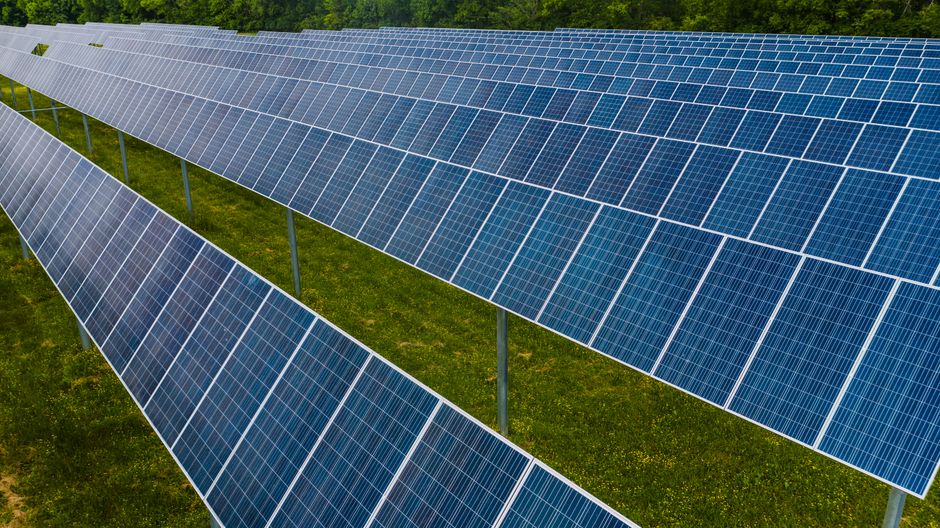
Portable solar is the easiest way to start generating your own electricity in the UK. There is no roof survey, no scaffolding and no electrician - you unfold a panel, point it at the sun, and it fills a battery you can carry. Garden solar is the next step up: a panel on a frame, a shed roof or a wall, wired to a battery or a small off-grid system.
This guide orients a UK newcomer to both. It covers what the kit actually is, what it is genuinely useful for, how it differs from plug-in home solar, and the UK rules, weather and economics worth understanding before you spend anything.
What is portable and garden solar?
Portable solar is built around two parts. The first is a foldable or lightweight panel that turns daylight into DC electricity. The second is a portable power station (a self-contained rechargeable battery with mains sockets, USB and 12V outputs, rated in watt-hours). The panel fills the power station during the day; the power station hands the energy back whenever you need it. Some people skip the power station and wire a panel straight to a 12V leisure battery instead, which is common in caravans and boats.
Garden solar covers slightly more permanent outdoor setups: a panel mounted on a ground frame, a shed roof or a wall, feeding a battery or a small off-grid circuit. A garden office or shed with its own panel and battery is a typical example.
The defining feature of both is that they are off-grid (not wired into your home's mains circuits or the national electricity network). That single fact shapes everything else - the rules, the paperwork, and what the kit can and cannot do for your bills.
How is it different from plug-in home solar?
Plug-in solar is a certified panel-and-microinverter kit that plugs into a household socket and pushes electricity back into your ring main, so it can offset what the whole house is drawing. It becomes legal for UK homes on 27 August 2026 under new regulations, with an 800W cap and certified whole-product kits. Because it injects power into your wiring, it carries obligations: you notify your Distribution Network Operator (the company that runs the cables to your home), and only certified kits qualify.
Portable and garden solar sidesteps all of that. An off-grid power station is never wired into your mains, so there is nothing to notify, no certification gate and no installer. You are simply charging a battery. The trade-off is scope: a portable kit only powers the things you plug directly into it. It will run a laptop, a fridge or a string of lights beautifully, but it cannot lower the reading on your whole-house meter the way a grid-tied system does. Think of portable solar as bringing power to a place, and plug-in solar as shaving a home's bill.
Who is portable and garden solar for?
The kit earns its place wherever mains power is absent, awkward or unreliable. The most common UK use cases are:
- Garden offices and sheds - lighting, a laptop and a phone charger from a panel and battery, with no trench and no electrician.
- Allotments - a site with no mains at all can still run a pump, tools or a kettle from a power station topped up by a panel.
- Camping, campervans and festivals - a folding panel keeps phones, cameras, lights and a cool box going for days off-grid.
- Caravans and boats - a fixed panel trickle-charges the leisure battery so it does not go flat between trips.
- Emergency backup - a charged power station keeps a router, phones and a few lights alive through a power cut, and the panel recharges it the next day.
- Working outdoors - charging power tools, e-bikes or garden equipment away from a socket.
If your goal is instead to cut the electricity bill for your whole house, a grid-tied system is the better tool - portable solar is about independence and portability, not headline savings.
What are the main types of kit?
You do not need to know every product to understand the landscape. Portable and garden solar breaks down into a few clear categories:
- Folding panels (roughly 60-200W) - the classic portable panel, with a kickstand and a carry handle. Quad-fold 60-100W panels weigh around 1.5-3kg and suit camping and day use; 100-200W panels are better for filling a power station.
- Rigid and semi-flexible panels - fixed panels for a shed roof, campervan or boat, usually wired through MC4 connectors (the industry-standard weatherproof plug used on almost all solar panels).
- Portable power stations (roughly 300-2000Wh) - the battery that stores what the panel makes. Capacity is measured in watt-hours: a 1000Wh unit can, in round terms, run a 100W device for about ten hours.
- Small fixed garden arrays - a ground-mounted frame or wall bracket holding one or more panels, feeding a battery or off-grid circuit for a shed or garden building.
The panel and the battery are chosen together. A big battery with a weak panel takes days to refill; a strong panel with a tiny battery wastes daylight once the battery is full.
How much power will you actually get in the UK?
This is where realistic expectations matter most. A panel's headline wattage is measured under Standard Test Conditions - bright lab light of 1000 watts per square metre at 25C - which British skies rarely deliver. In practice a 200W folding panel commonly produces around 140-170W in good conditions, and far less under cloud.
Over a full year, UK solar yields roughly 900 kWh for every kilowatt-peak of panel installed, ranging from about 750 kWh in northern Scotland to around 1,050 kWh on the south coast, based on the reference figures the industry standards body MCS uses. The seasonal swing is dramatic: a panel that fills a power station in a couple of hours on a bright June day may take most of a short, overcast December day to do the same job.
The practical lesson is to size the panel generously and treat winter as a bonus rather than the baseline. If you need reliable year-round power, plan for the dark months, not the sunny ones.
Do you need planning permission for garden solar?
A portable panel you set out in the morning and pack away later is not a building or a structure, so it raises no planning issues at all. The question only matters once a panel becomes fixed in your garden.
In England a free-standing installation in the grounds of a house is usually permitted development, meaning no planning application, provided it stays inside the limits. Those limits change on 27 August 2026, and for a house they get more generous, so it is worth knowing which set applies to you.
Until 26 August 2026, the installation must be no more than four metres high, must sit at least five metres from the boundary of your property, and the array must be no larger than nine square metres with no dimension over three metres. Only the first stand-alone installation in the curtilage is permitted development; a second needs an application.
From 27 August 2026, the 2026 amendment to the permitted-development rules replaces the flat five-metre boundary ban with a sliding height limit, which is the change most likely to matter to you. Four metres remains the default. Within five metres of the boundary you may go up to two metres, and up to one metre if that spot is also forward of the front wall of the house. Where more than one row applies, the lowest limit governs. The nine-square-metre panel cap stays; the three-metre dimension cap and the one-installation rule fall away for houses. In short, a corner of the garden that is off limits today becomes usable, just not at full height. We set out the full Class A and Class B limits on the main legality page.
Tighter rules apply in sensitive locations under both regimes. Panels must not go within the curtilage of a listed building or on a scheduled monument. In a conservation area, an installation closer to the highway than the house needs prior approval from the council and must be no higher than two metres, and from 27 August the same prior-approval step applies on article 2(3) land within five metres of the boundary. If your panel is mounted on a shed roof or a wall rather than a frame, it follows the separate rules for building-mounted solar instead. The rules also differ in Scotland, Wales and Northern Ireland, so when in doubt a quick call to your local planning authority settles it before you dig a single post hole.
Can you get paid for the electricity you generate?
Grid-tied homeowners can earn money through the Smart Export Guarantee, under which a licensed supplier pays for surplus electricity sent back to the national grid. Ofgem confirms the scheme covers solar PV and other technologies and pays generators for what they export to the network. The catch for our purposes is in the word export: the Smart Export Guarantee rewards electricity pushed onto the grid.
An off-grid portable or garden setup has no grid connection, so it exports nothing and earns nothing from the scheme. Its value works differently. Every unit you draw from the battery is a unit you did not buy from your supplier, and the kit delivers power in places the grid does not reach or at times when it fails. You will not see a payment land in your account, but you also stop paying to run whatever the battery powers. For most buyers that independence, not an export cheque, is the point.
What should a beginner look for?
Battery capacity (Wh)
Add up the watt-hours your devices need in a day, then choose a power station with headroom. Undersizing is the most common regret.
Panel wattage
Aim higher than feels necessary - UK output sits well below the nameplate figure, so a bigger panel pays off all year.
Solar input rating
Check the maximum solar input the power station accepts, and match your panel to it so you are not throttled or under-fed.
Connectors
MC4, Anderson and DC barrel plugs all appear. Confirm the panel and battery speak the same language, or budget for an adapter.
Weatherproofing (IP rating)
Anything left outdoors - garden or shed panels especially - needs a sensible IP rating so rain does not end its life.
Weight and portability
For camping, grams matter; for a fixed shed setup they do not. Match the format to how you will actually carry it.
Pure sine wave inverter
If you will run sensitive electronics or medical devices, a pure sine wave output is worth insisting on.
Where do batteries and storage fit in?
The battery is the heart of any off-grid setup - it is what lets you use sunshine after dark. For a portable kit that battery is the power station; for a garden system it may be a separate leisure or lithium battery. Modern power stations increasingly use LiFePO4 (lithium iron phosphate) cells, which last for far more charge cycles than older lithium chemistries and cope better with being left partly charged.
Storage is a deep topic in its own right - sizing, chemistry and pairing a battery with panels each deserve proper attention. This guide keeps it at an overview level; for the detail, see our batteries and storage guides.
Frequently asked questions
Is portable solar worth it in the UK?
Do I need permission to put a solar panel in my garden?
Can portable solar power my house during a power cut?
What size power station and panel do I need?
Does portable solar work in winter or on cloudy days?
Plug-in Solar in the UK: The Complete 2026 Guide
Do You Need Planning Permission for Plug-in Solar?
How Does Plug-In Solar Work?
Plug-in Solar vs Rooftop Solar
Thinking about powering your whole home?
Portable solar brings power to a place; plug-in solar shaves your household bill. See how grid-tied home solar works and what it can save.